A cardboard box sniffing game for dogs
Turn a clean delivery box into a short indoor search. The first round is simple enough to play without any training commands.
Choose a plain box and a quiet spot
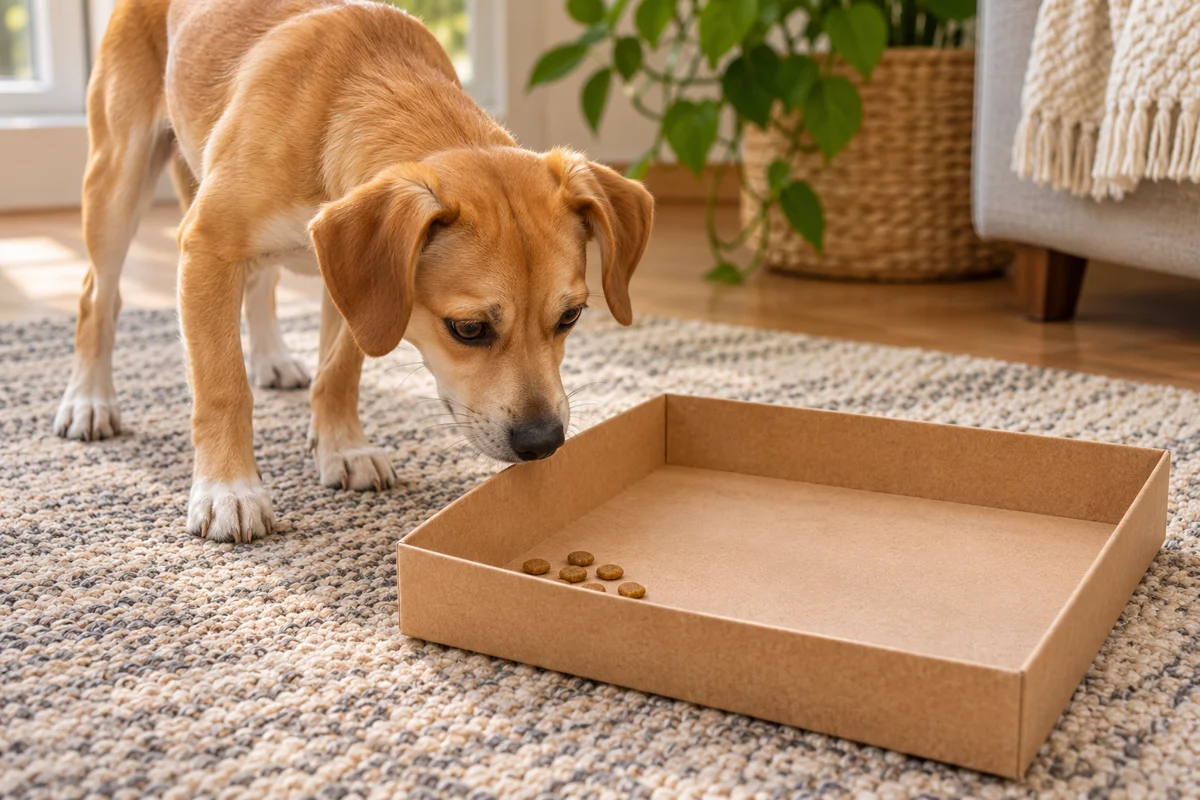
Start with one clean, shallow cardboard box and a few pieces of food your dog already eats. A shallow lid can work for a small dog or a dog that hesitates to put its face into a box. The dog should be able to see over the edge and back away without having to turn inside it. Use something large enough for your dog to move its nose freely, but small enough that it does not need to climb in to reach the food.
Remove tape, staples, plastic cords and loose labels first. Leave out packaging inserts, especially foam and plastic. Skip any box that held cleaning products, has an oily stain, smells strongly of its former contents, or is wet and starting to come apart. You want a plain surface you can inspect easily before and after the game. If your dog tends to eat cardboard or other nonfood items, use a familiar washable mat instead of offering cardboard. Supervise even if your dog ordinarily leaves packaging alone.
Set the box on a rug with enough room around it for the dog to approach from several sides. Avoid a corner between pieces of furniture where an excited dog could have trouble turning. Keep children and other pets elsewhere for the first round. If there are two dogs in the home, give them separate turns in separate spaces. For a dog that guards food, a shared search can create more pressure than fun, so use a separate space and consult a qualified professional if you need help planning it.
Make the first find obvious
Place a few pieces of kibble on the open floor near the box, and put one or two just inside the nearest edge. Let the dog approach rather than holding the box up to its face. Watch where it chooses to stand. A dog that takes the food outside and leaves the food inside may need a lower edge or a quieter location. Move the next pieces to the floor and let the dog decide whether to come back to the box. There is no need to push the game past that point.
For a dog that is comfortable putting its nose inside, spread the next few pieces around the bottom. Keep most of them visible the first time. The sound of the box sliding can surprise a dog, especially on a hard floor. If the box moves, place it more securely on the rug, then try one piece near the edge again. Avoid blocking the far side with your foot. Your dog should have a clear path to step away if the sound startles it.
Give the dog time to search without pointing at every piece. If it goes back to sniffing a corner where there is no food, wait a moment. It does not have to check the box in the same order you would. When the last piece has been found, lead the dog away from the box by calling it to a familiar spot, then pick the box up. If the dog is still hovering over it, give it space instead of reaching underneath its face.
Change one feature at a time
Once the dog searches the empty box easily, place a single loose sheet of plain paper over part of the bottom, with a piece of food peeking out at one edge. Use a sheet large enough to remove quickly, and skip paper entirely if your dog chews or swallows it. The paper should move with a gentle nudge. A tight wad or a closed box turns the task into tearing or digging, and those are different activities from the search you are setting up.
Another option is to set out two shallow boxes a few steps apart. Put food in both the first time so the dog discovers that visiting the second box is worthwhile. Later, leave one empty and put the food in the other. Swap which box you use between rounds. Moving the boxes around the room is a larger change, so save it until the dog can search both confidently in the original location.
If your dog stops searching, look at the last thing you changed. The box may be too deep, the floor might be slippery, or a thin bag may make a noise nearby. Go back to the last round that worked. Expose the food again or remove the second box. You can also end the game and try a shorter version tomorrow. Finding one piece and walking away is a perfectly good result for a cautious dog.
Know when to put the box away
A friendly search often looks quiet: the dog sniffs, moves a short distance and checks another spot. If it starts pawing hard, biting pieces off the box, or trying to climb into it, stop the round. Switch to a familiar activity and put the cardboard away when you can do so safely. Do not leave it on the floor as an unsupervised toy. Check after each round that no bits of tape or cardboard have come loose.
Use a small portion of the dog’s usual food so the game fits into your normal feeding routine. If the dog is on a special diet, use food that is already approved for it. Pick up missed pieces afterward, especially if the next animal through the room eats a different diet. A dry box can be kept for another supervised round as long as it is still intact and clean. A damp or damaged box should go into the appropriate waste or recycling bin for your area.
Build a routine around a moment you already have
Pick a point in the day when the room is usually quiet. Before dinner can work if nobody is walking through the kitchen. After a walk may work better for a dog that needs a little time to settle first. Leave the box in a cupboard with the rug nearby so setup takes less than a minute. Keep the first round short on a busy day, and put the box away while your dog still has the option of leaving it. That makes it easier to repeat the game tomorrow without turning it into a long activity you have to fit in.
Try these two variations on another day
For the simplest no-box version, put three pieces of food on a clean mat with space between them. Give the dog time to work from one end to the other. For a dog already happy with the box, keep the box open and place food in two opposite corners. Stay in the room and let the dog find both. One of these versions may suit your home better when space is tight or when you have only a minute before dinner.
Put a short note in your phone after the first try. Record which box height worked, whether the dog approached from the side or front, and whether the box slid. The next person who plays can use the same setup without guessing. For another easy activity that leaves room for sniffing, use the quiet dog walk guide to plan a short outdoor route.